
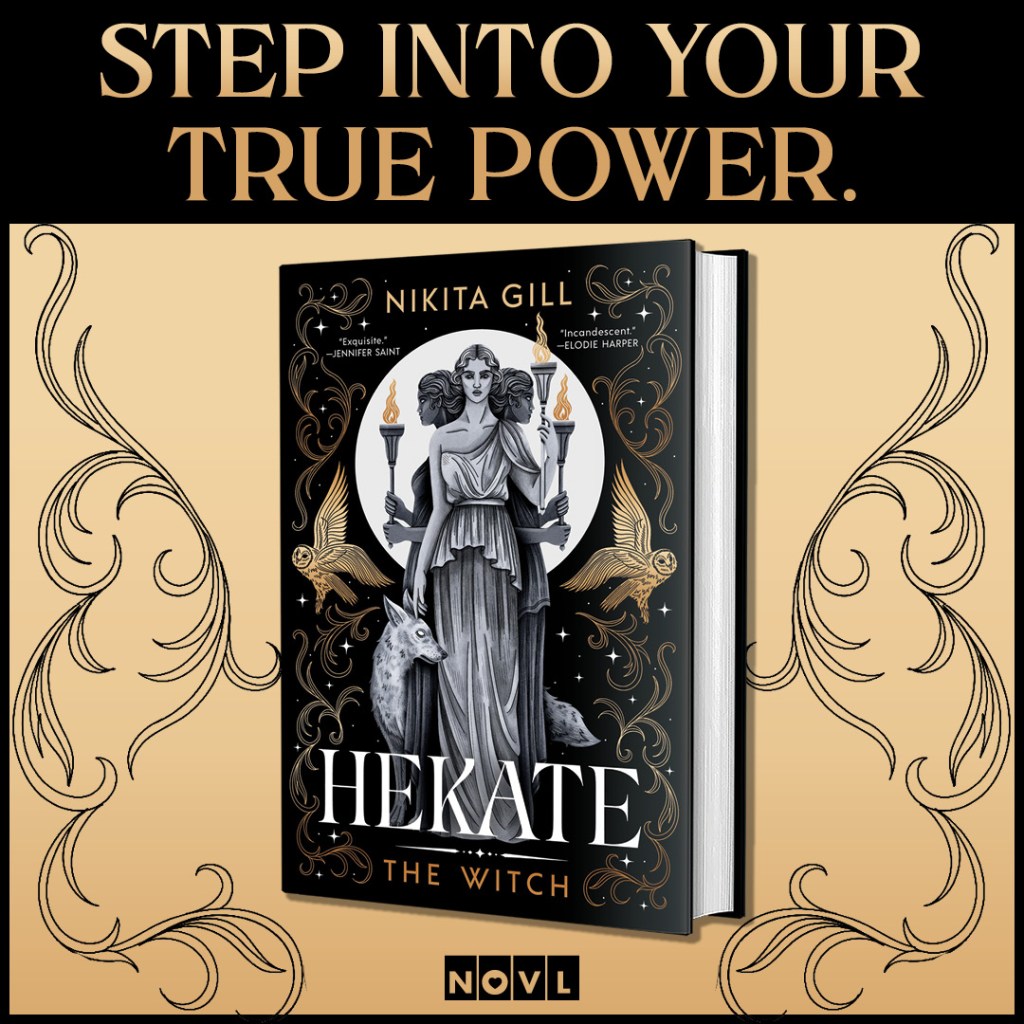
Hekate
The Witch


Contributors
By Nikita Gill
Formats and Prices
- On Sale
- Aug 25, 2026
- Page Count
- 400 pages
- Publisher
- Little, Brown Books for Young Readers
- ISBN-13
- 9780316581837
Price
$13.99Price
$18.99 CADFormat
Format:
- Trade Paperback $13.99 $18.99 CAD
- ebook $12.99 $16.99 CAD
- Hardcover $19.99 $25.99 CAD
- Audiobook Download (Unabridged) $24.99
Buy from Other Retailers:
This is an ancient story written long before us. It is a tale full of Gods and monsters, divine wars and ghosts, and the tangled mess made by the divine and the mortal. This is a ode to mothers and daughters, the sacred and the courageous, and the grief that grows in the absence of love. It is a song of joy and friendship that is homegrown and pieced together by careful, gentle fingers.
At the heart of this story is a girl looking for answers. At the soul of this story is the divine Goddess within us all.
In this stunningly intimate reimagining of a Greek myth, internationally renowned poet Nikita Gill showcases the underworld and its chthonic deities in all their glory, and weaves a gripping story about the young Goddess Hekate coming of age within their midst.
Series:
-
* "Irish Indian poet and author Nikita Gill (The Girl and the Goddess) revives the figure of Hekate in a gripping coming-of-age story told not in epic verse, but in deeply personal poems from the goddess's point of view."Shelf Awareness, starred review
-
* “A beautiful coming-of-age story about a young woman who pushes boundaries, makes mistakes, and courageously moves forward despite learning increasingly heartbreaking truths about the world around her....Strongly recommended for fans of Greek and Roman mythology, particularly feminist retellings such as Jennifer Saint’s Ariadne or Madeline Miller’s Circe."School Library Journal, starred review
-
"Nikita Gill has a gift for slicing deftly through these complex myths to reveal the glittering, poignant truth at their heart. In Hekate, we are plunged into a vivid and imaginatively wrought divine world that is monstrous, magical and beautiful through the perspective of a bewildered child of war who grows up to understand and embrace her power. It's a timely and achingly resonant reflection on conflict, fear and the unbreakable bonds of family conveyed in exquisite, evocative poetry."Jennifer Saint, author of Ariadne
-
"In a wholly original, incandescent take on the myth of Hekate, Nikita Gill captures the beauty, brutality and otherworldly strangeness of the ancient world like no other writer. This beautifully imagined tale of a Refugee Goddess at times shares the dreamlike quality of Dante's Inferno, as Hekate encounters all the wonders and terrors of the Underworld. Her quest to find her destiny among a kingdom of outcasts was both deeply moving and absolutely captivating. Nikita Gill weaves in contemporary themes of war, displacement, loss and identity in a way that feels totally resonant with the Classical setting. This poem is pure magic."Elodie Harper, bestselling author of The Wolf Den trilogy
-
"A magical journey of survival and discovery through the Greek Underworld. Populated with unforgettable gods and titans and narrated in dream-like poetry, Hekate is a unique creation and the most original addition to the retelling genre I have read in a while."Costanza Casati, bestselling author of Clytemnestra
-
“Hekate must be a work of stunning witchcraft, because I was spellbound from its very opening pages. Gill's lyrical prose is pure magic and brings the captivating, enigmatic Hekate to life so beautifully, exploring the life of a goddess fighting to find her place and power in the world.”Rosie Hewlett, bestselling author of Medea
-
“A marvel! Gill divests these mythological figures of centuries of dust, rendering them vivid, complex - almost human. Hekate’s odyssey of self-discovery brings her from the depths of the Underworld to the heights of Olympus, immersing the reader in the life of the goddess of crossroads and witchcraft. This is mythology distilled to its essence, and crafted into glittering, jewel-like prose.”Luna McNamara, author of Psyche and Eros
-
“The richly imagined setting serves as a vibrant backdrop for Hekate’s journey of self-discovery and actualization as she uncovers dark secrets and meets familiar and novel figures of Greek myth.”Publishers Weekly
-
“Poet Gill’s recognizable voice anchors this work as much in mythology as in the perils of modern girl- and womanhood; alongside the familiar narrative beats of an adventure story, she explores with care generational trauma, sexual violence, and the cost of war…. Fiercely feminist, this reimagining of a lesser-known goddess crackles with magic.”Kirkus
You May Also Like


ABOUT THE AUTHOR

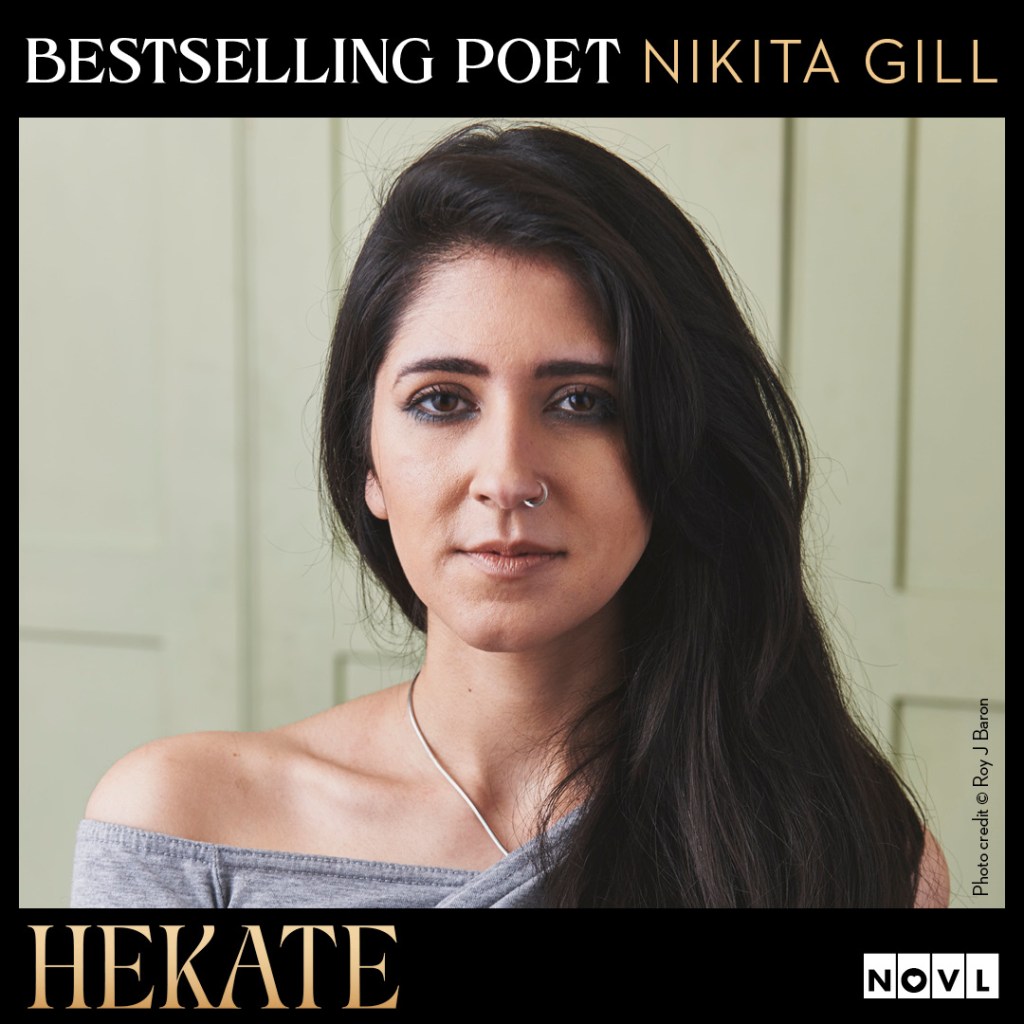
Nikita Gill is an Irish Indian poet and New York Times bestselling author who has the attention of over 800,000 Instagram followers worldwide for her work. Her work offers a shift of perspective which centers women in both Greek and Hindu myth as well as folklore. Gill has written two verse novels and seven poetry collections, including Fierce Fairytales, Wild Embers, and Where Hope Comes From which she published with Hachette Books.

Fan Behavior


From NOVL Nation
“If you are a lover of Greek mythology retellings, this is a book you will instantly fall in love with.”
–Michelle, @thebookrealmguide
Peek the Audiobook

Hekate Book Club Guide
- How does verse bring this story to life? In what ways does it reflect the Greek mythology it is based upon?
- How does the idea, “A story is a powerful thing” (p. 9) remain a theme throughout the novel? Why is storytelling so important?
- Charon explains to Hekate that, “All things have a purpose. Not every purpose is good” (p. 38). Why is purpose essential? How does Hekate discover her purpose? Does it change over the course of the story?
- Hekate describes her hand, “shaking with rage or sorrow; I no longer knew which one” (p. 39). Why do you think rage and sorrow are so intertwined? In what ways are these differing emotions similar?
- Why does Pallas agree to Hekate remaining in the Underworld? Do you think Pallas or Styx feel obligated? Does guilt play a role in their decision?
- When Hekate learns her father is in the Underworld, she reflects, “Despite it all, I was a hopeful child” (p. 74). How is there hope in so much darkness? Does Hekate remain hopeful?
- Do you agree with Hekate’s observation: “Everyone assumed that to protect children, they must be kept in the dark—no one understood those secrets haunted the same children they were so ardently trying to protect” (p.76). How are secrets beneficial in this story? How are they harmful?
- How does the concept of family change throughout the story? While there are many familial ties among the Gods and Goddesses, how does Hekate find her chosen family?
- Hekate muses, “Perhaps this was what womanhood was. The dangerous knowledge of who you are and what you could do with that power if pushed” (p.263). Why is the knowledge of who you are “dangerous”? How do the women and Goddesses discover and wield their power throughout Hekate?
- The concepts of betrayal and forgiveness are integral to the story. Hekate fights to protect her home, but do you think she forgives the Olympians? Why or why not?
- The Olympians fear what they do not know. Why is this detrimental to everyone? Do you see this happening in the world today?
- Hekate is a reimagining of Greek mythology, but it’s also the story of a child who is a refugee of war. What kind of effect does this type of narrative have on readers who witness or experience similar situations in their own worlds?
ON THE BLOG



#HekateBook
